
Your Kid’s Central Nervous System (CNS.
When people think about athletic development, they often picture muscles, strength, and conditioning. While those things matter, the real driver of athleticism in kids isn’t the body—it’s the central nervous system (CNS). Understanding this changes how we should think about youth training.
The central nervous system—made up of the brain and spinal cord—is the governor of movement. Every sprint, jump, throw, and change of direction begins in the brain. The CNS decides how fast muscles fire, how efficiently they work together, and how well the body coordinates under speed and pressure. In young athletes, this system is incredibly adaptable.
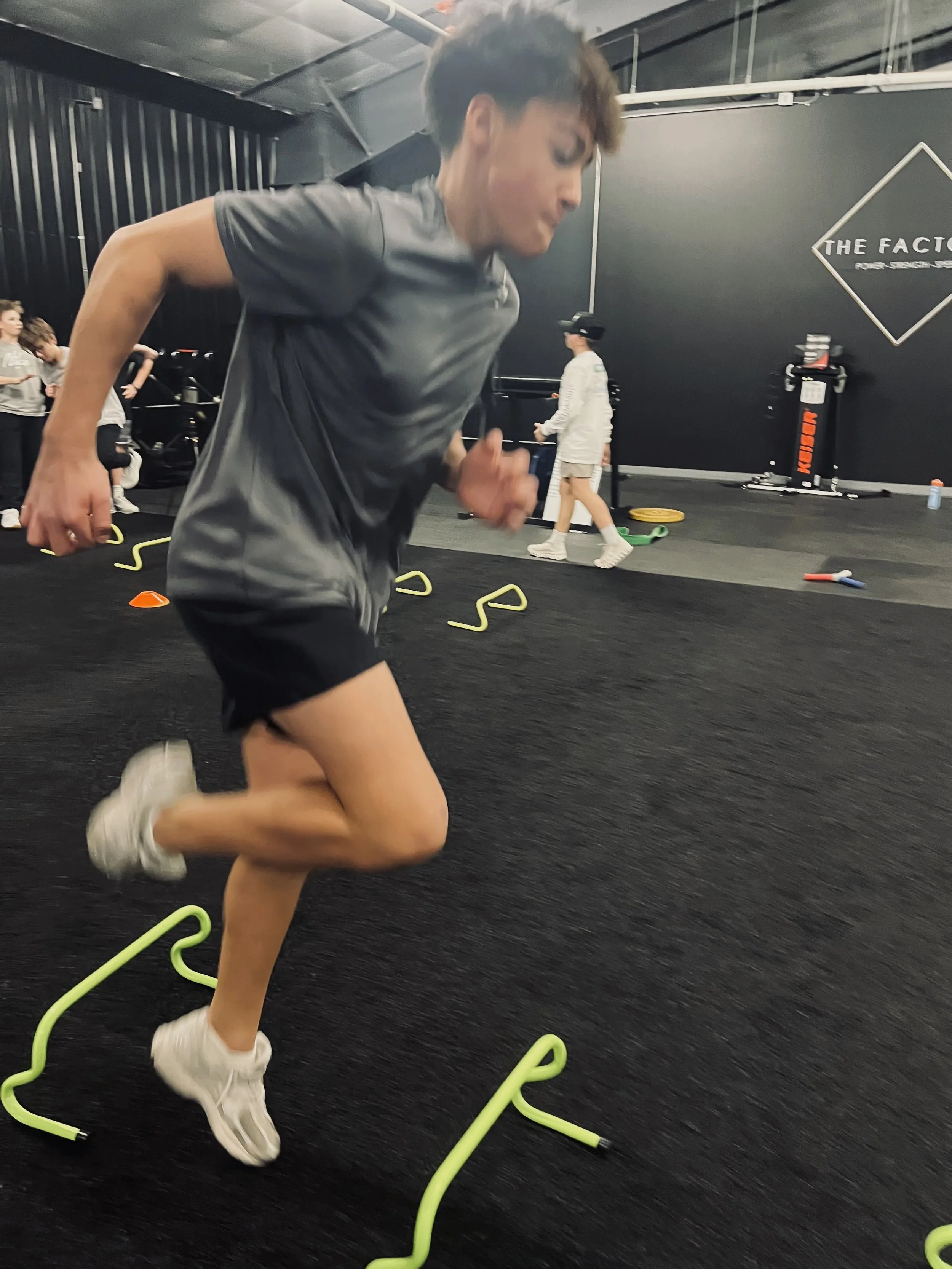
Highway to Development
“Think of the CNS like a highway system. Some kids are operating on narrow, single-lane roads. Others have multiple lanes open. Good training doesn’t just make the engine stronger—it widens the lanes, allowing movement to happen faster, smoother, and with more control.”
Think of the CNS like a highway system. Some kids are operating on narrow, single-lane roads. Others have multiple lanes open. Good training doesn’t just make the engine stronger—it widens the lanes, allowing movement to happen faster, smoother, and with more control.
This is why quality youth training looks very different from adult training. Kids don’t always need to be exhausted, crushed with weights, or pushed to failure. While some of that might build character, what they really need is to learn how to move fast with high-quality movement, how to decelerate, how to store and release energy, and to wire their brains to operate at full capacity.
Sprint mechanics, jumping, landing, coordination drills, rhythm, balance, and reactive movement all feed the CNS valuable information. These inputs help the brain learn timing, sequencing, and force application. Over time, the nervous system becomes better at recruiting muscle fibers, reducing wasted movement, and keeping the body efficient under speed.
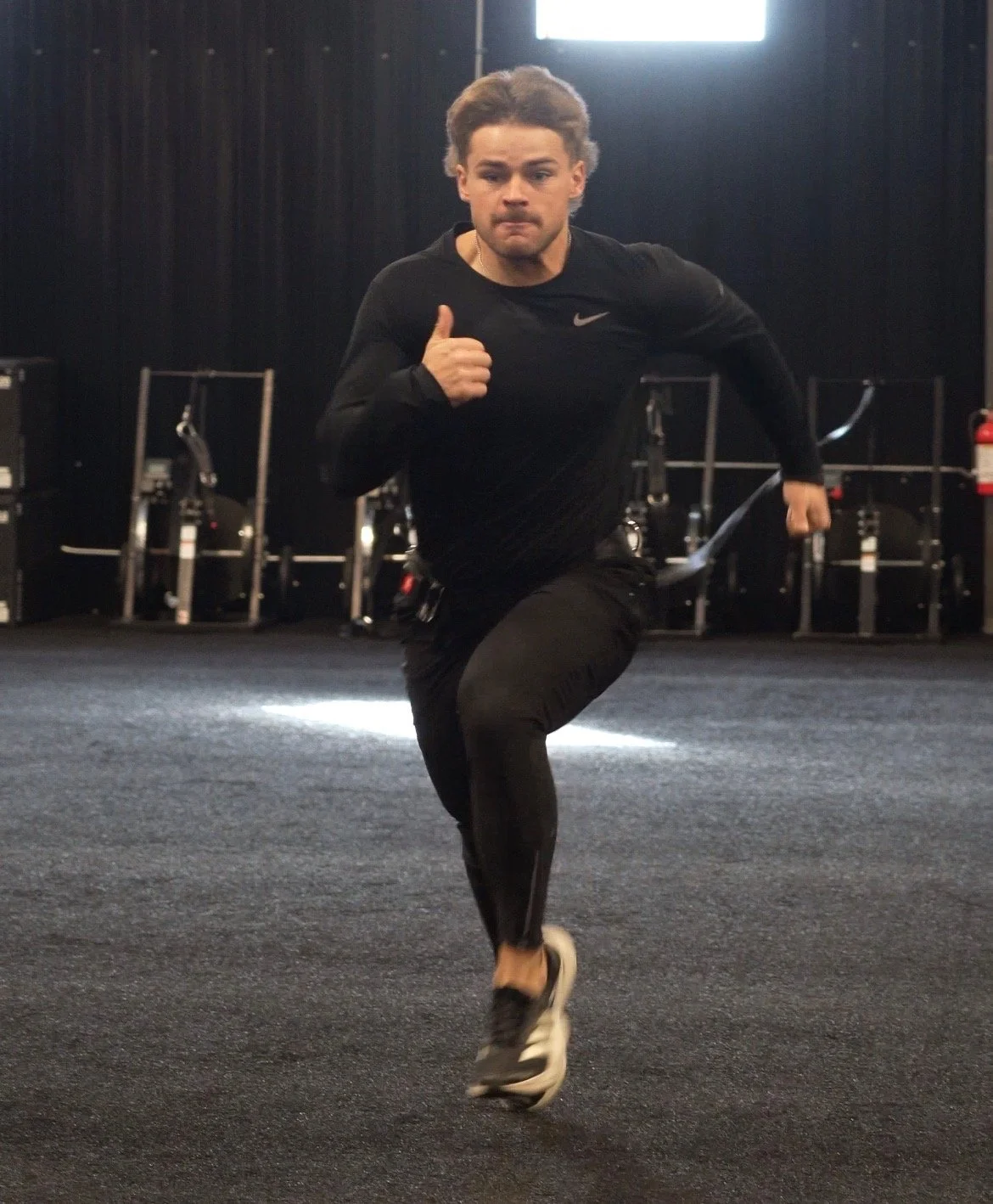
Factory Built CNS
11 years old to Division 1. Bo Tabola (Missouri State Baseball) has been training with us since he was 11 years old. Bo’s greatest gift is his work ethic. The training of his youth primed his CNS to operate how it does today.
This also explains why early specialization and excessive fatigue can be harmful. When kids are constantly tired, the CNS can’t learn effectively. Skill quality drops, movement patterns degrade, and progress slows. The goal isn’t to do more—it’s to do better.
Strong CNS development creates a foundation that lasts. Kids who move well early don’t just look more athletic—they’re more resilient, adaptable, and confident. As their bodies grow and mature, that widened neural “roadway” allows strength, power, and sport skills to layer on smoothly.
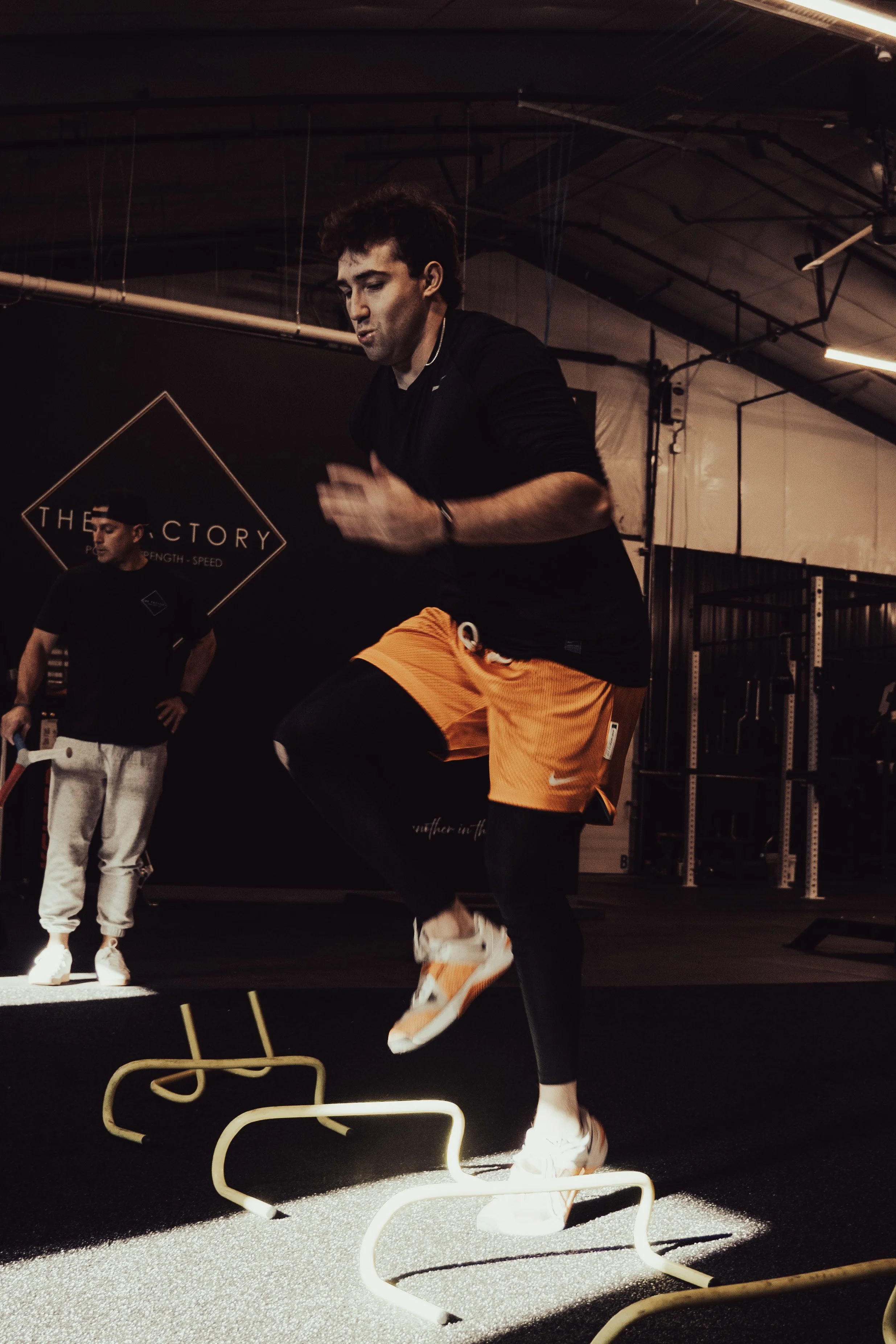
A foundation built to last.
Finley Bates - University of Tennessee Baseball, has been training at The Factory since 7th grade. Fin wasn't gifted with game changing speed or size, he has simply mastered the ability to operate at full throttle no matter the task. In other words, his CNS has no limits.
Great youth training isn’t about building mini adults. It’s about teaching the brain how to control the body. When we train the nervous system first, everything else—speed, strength, coordination, and confidence—follows.