
Over Coached and Over Cued.
Constraint-Based Training: Lets Stop Over-Coaching and Start Developing Athletes
TRAVIS MITCHELL
Coaches and parents are killing athletes with over-cueing. The problem is that everyone is waking up to the fact that young athletes won’t compete in today’s sports without some degree of excellence. But we often confuse excellence with perfection. We end up chasing perfection of every rep instead of excellence through a long term process. And thanks to social media- everyone is a guru, every coach has something to prove to their athletes (and other coaches), and every dad is a technician of their kids craft.
I’m guilty of all three.
Every rep comes with a paragraph of instructions. Every mistake is met with another verbal correction. What we think is “good coaching” often turns into paralysis by analysis. Athletes stop moving freely, stop adapting, and stop solving problems on their own.
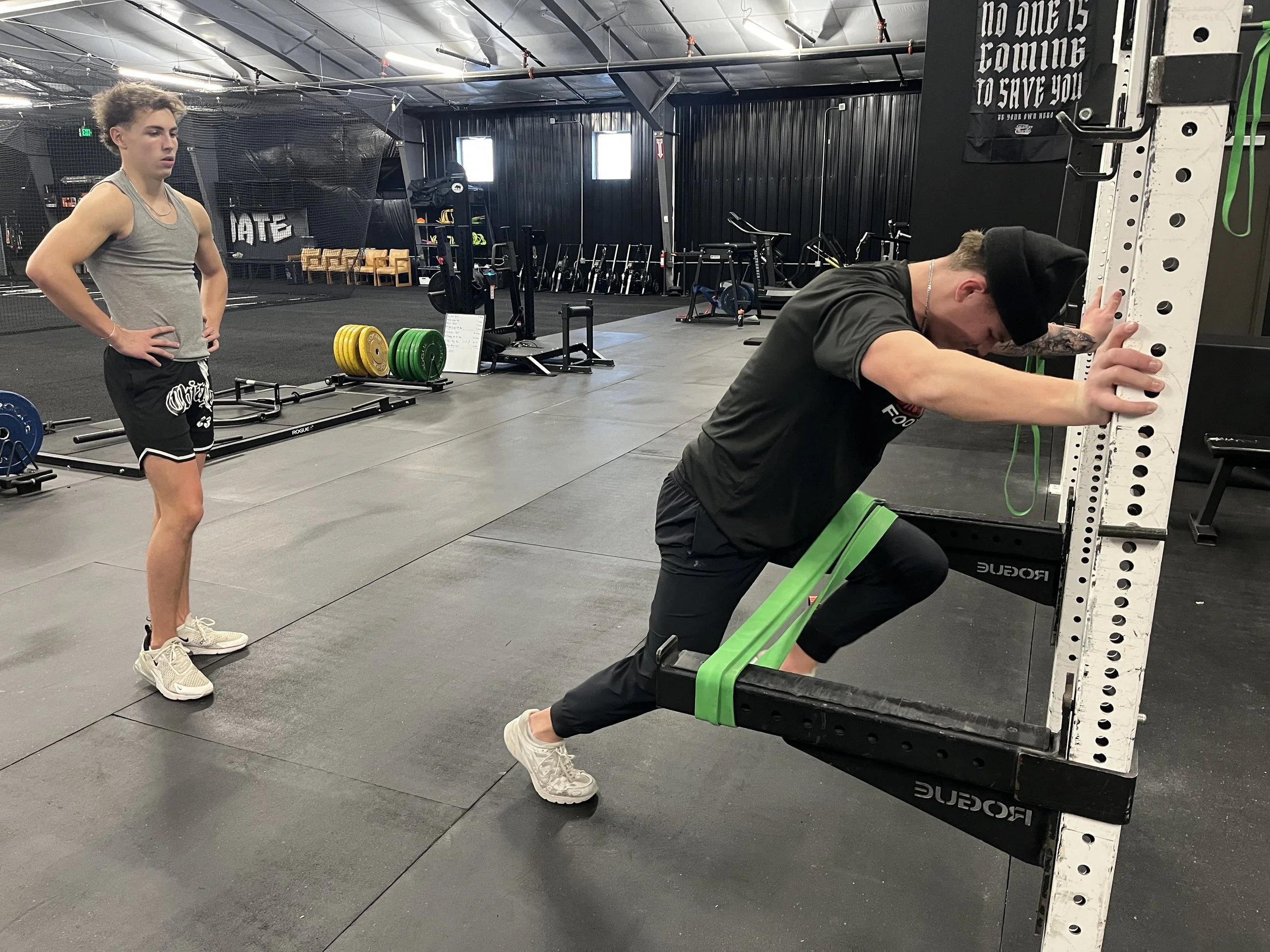
Bruce Lee once said, “be like water”.. well it’s tough to be like water when you’re thinking about body parts.
Great athletes aren’t built by memorizing cues. They’re built by learning how to solve problems. Bruce Lee once said, “Be like water”.. well it’s tough to be like water when you’re thinking about body parts.
Instead of telling an athlete how to move, you give them a problem to solve and let the movement organize itself. The constraint guides them to a solution without the boring explanation. The nervous system learns faster, the movement sticks longer, and the athlete owns the skill.
That’s the foundation of constraint-based training.
Problem Solving Over Position Coaching
Take sprint acceleration as a simple example. You can cue shin angles, torso lean, arm action, and projection all day long. Or you can have an athlete sprint from a push-up or prone position. Instantly, the problem is clear: How do I get up and go fast?
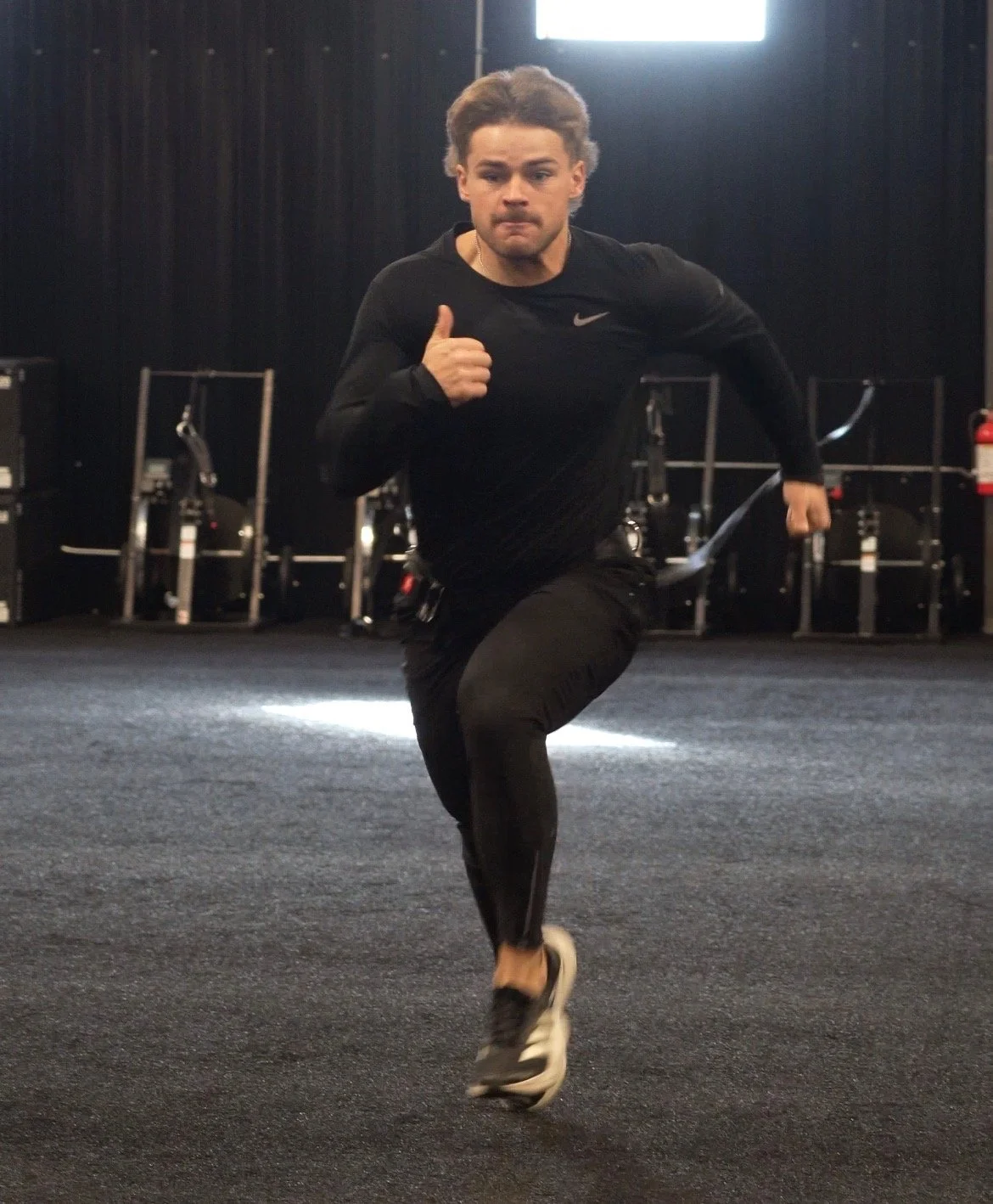
Athletes slow down when they think. Give them a constraint so they don’t have to think..let them move fast and free.
The body self-organizes into better angles, force application improves, and acceleration mechanics clean themselves up—without a single cue.
That’s constraint-based training.
Equipment as the Constraint
Sometimes the constraint isn’t a drill—it’s the environment or equipment.
A curved, non-motorized treadmill is a great example. You don’t need to lecture posture, foot strike, or rhythm. The treadmill demands good posture and front-side mechanics. If the athlete collapses or overstrides, the belt slows. The equipment becomes the coach.
Same lesson, less noise.
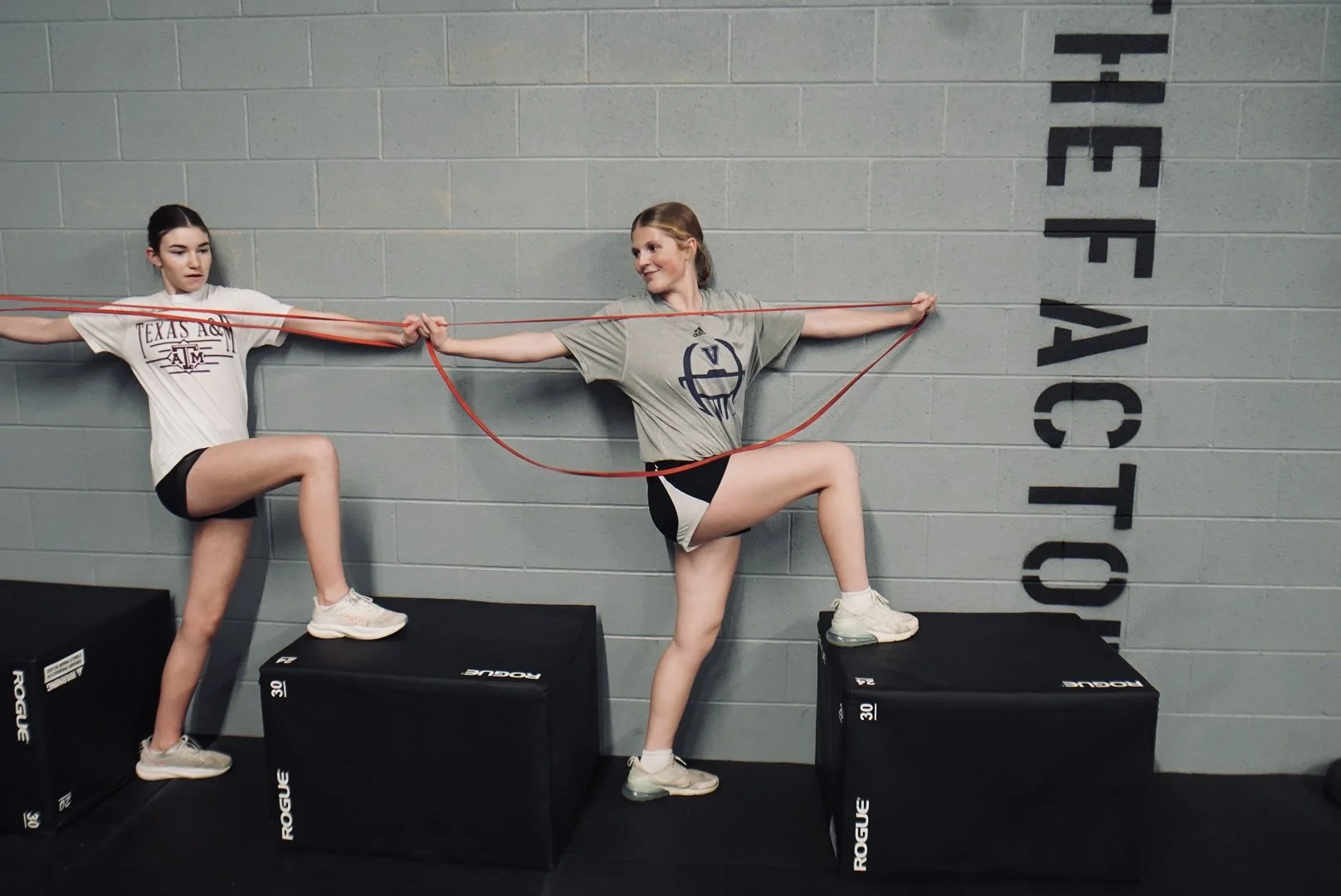
Sometimes the constraint isn’t a drill—it’s the environment or equipment.
Downstream Constraints Matter
Constraints don’t always have to be at the start of the movement. They can be downstream, shaping the finish and letting the athlete figure out how to get there.
Think about teaching shooting in basketball. Instead of cueing elbow position, wrist snap, and follow-through mid-rep, you can start by giving the athlete the correct finish—wrist through, fingers down, balanced landing. The problem becomes: How do I organize my body to arrive here consistently?
The movement cleans itself up backward.
Sport-Specific Examples
Quarterbacks and baseball players benefit massively from this approach. A “pivot pick” or “ten-toe drill” doesn’t lecture hip-shoulder separation—it demands it. The athlete must sequence properly to complete the task. If they don’t, the ball tells the truth.
No over-cueing required.
The Big Takeaway
Constraint-based training respects how humans actually learn. It builds adaptable athletes, not robots waiting for instructions. The goal isn’t perfect reps—it’s better problem solvers.
And better problem solvers win.