
Your kid’s feet are probably too comfortable.
I grew up in what we used to consider BFE — on 20 acres near the Parker/Franktown border.
When I was nine years old, I remember I was mad at my mom for some reason, so I packed a bag full of snacks and “ran away”. I wandered around the edge of our property for an hour or two.
The best part is, I wasn’t wearing any shoes. Maybe I was just a feral wild child but barefoot was the norm - despite the fact our property was covered in cactus, yucca and pinecones, and only God knows what else. Anyways, when I came home, much to my surprise, my mom didn’t even know that I was gone!
Oh, how times have changed. I don’t know too many mama bears today that would not realize their son had gone missing for an hour or two. And if my son tried to pull a similar stunt, make no mistake, he would do it wearing his Nikes.
And therein lies the problem.
Kids today spend a huge percentage of their lives in shoes designed for looks and comfort, while moving around on perfectly manicured surfaces. The foot doesn’t have to do nearly as much work or adapt to anything.
Over time, that can mean flatter, more pronated feet, weaker big toes and less ability to sense and properly interact with the ground. And if we ignore it, those deficiencies can show up later when we start asking the body to produce and absorb much larger amounts of force.
If you walk into The Factory lately during our youth programs, you’ll see kids running around and doing different exercises barefoot. It immediately cleans up a lot of sprinting mechanics, but more importantly, it helps their feet develop a relationship with the ground. They also love it!
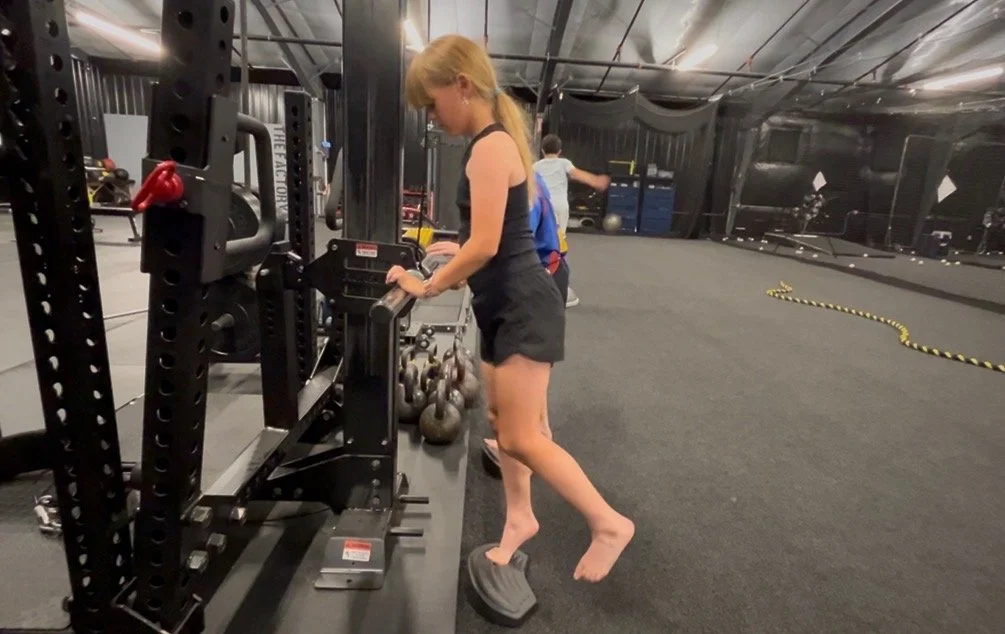
A Factory youth athlete using the “Toe Pro”. A special piece of equipment designed to strengthen the muscles in the foot, leg, and big toe.
Your foot is your first connection to the ground. It has to absorb force, stabilize the body and then help transfer that force back into the ground. The Achilles tendon plays a huge role in this process, acting like a spring by storing and releasing elastic energy through the stretch-shortening cycle. That ability to quickly absorb and return force is a major component of running and jumping performance and is closely related to qualities we measure with things like RSI (Reactive Strength Index).
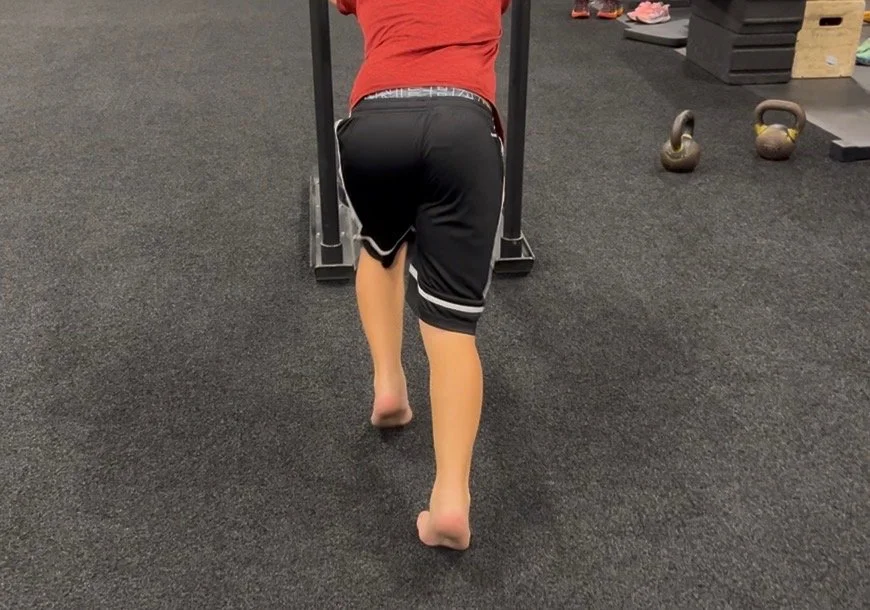
Training shoeless is great for heel strikers and almost immediately cleans up sprinting mechanics.
For our older, more advanced athletes, the first thing I do when they walk in the door for their first training session is look at their feet.
An athlete presenting significant ankle eversion and/or flatter feet may have some underlying movement deficiencies that can become a problem when we start adding load. These athletes are often a little knock-kneed, have an internal hip rotation bias and have a difficult time allowing their hips to move freely from IR to ER and back to IR. When high-intensity lifts such as deadlifts, heavy split squats and especially back squats and power cleans are introduced, these athletes need to learn proper foot and ankle positioning. Otherwise, we may simply be reinforcing the same movement strategy under heavier and heavier loads. That can contribute to excessive stress on the knees, hips, ankles and lower back.
This is especially important for athletes whose sports already demand a lot from the inside edge of the foot — volleyball players, linemen, baseball and softball catchers, wide receivers and any athlete who relies heavily on their instep to be good at what they do. If they rely on the same movement pattern in training without addressing it, we have a problem.
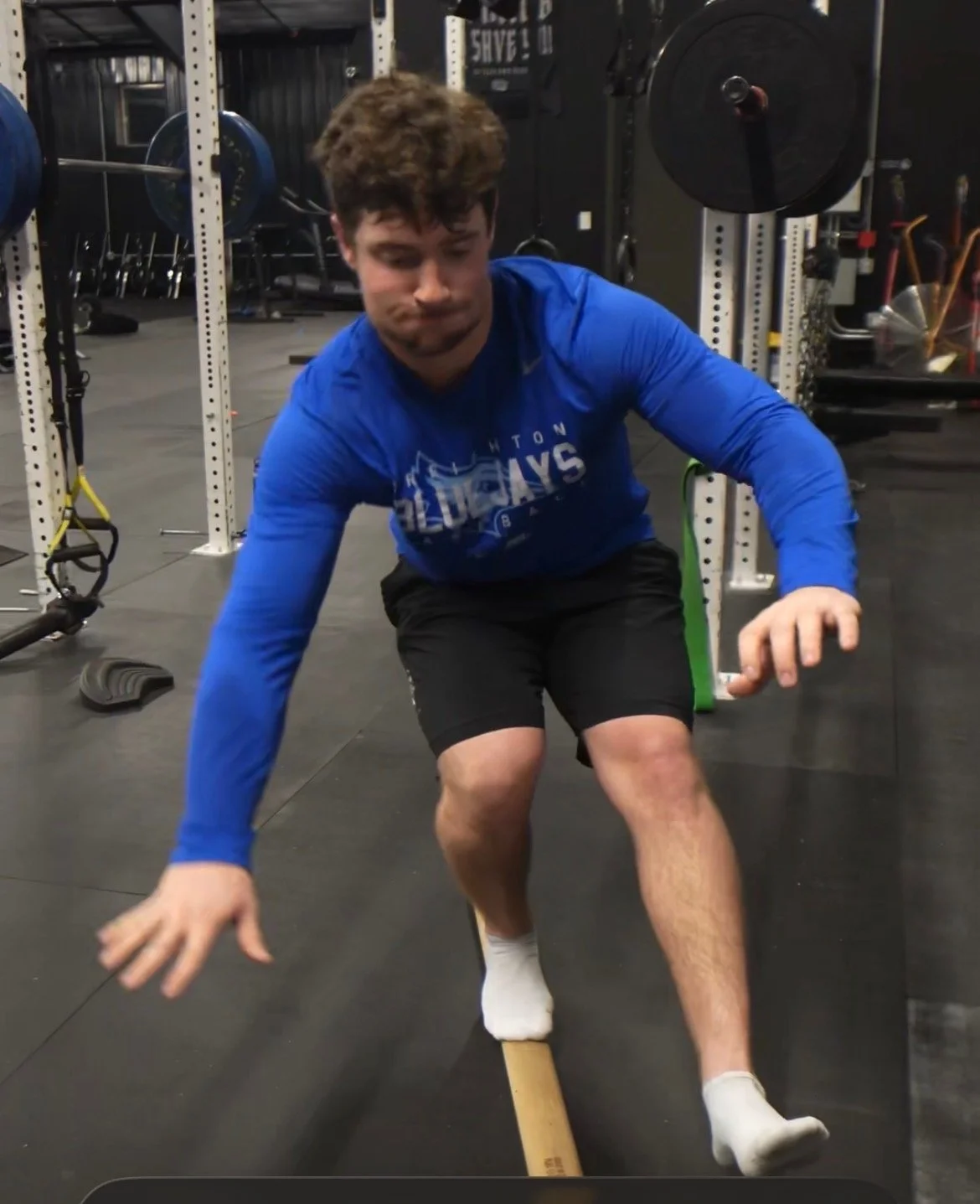
Division 1 Catcher, Nate McHugh performing a pistol squat on the wood balance beam designed by “The Foot Collective”.
At The Factory, we do everything we can to keep our players resilient and on the field. That’s why we’re always investing in equipment and devices designed specifically for foot and ankle health, and why we try to develop good habits from a young age.
But most importantly, the next time your feral child runs outside without shoes, let them.
#factorybuilt